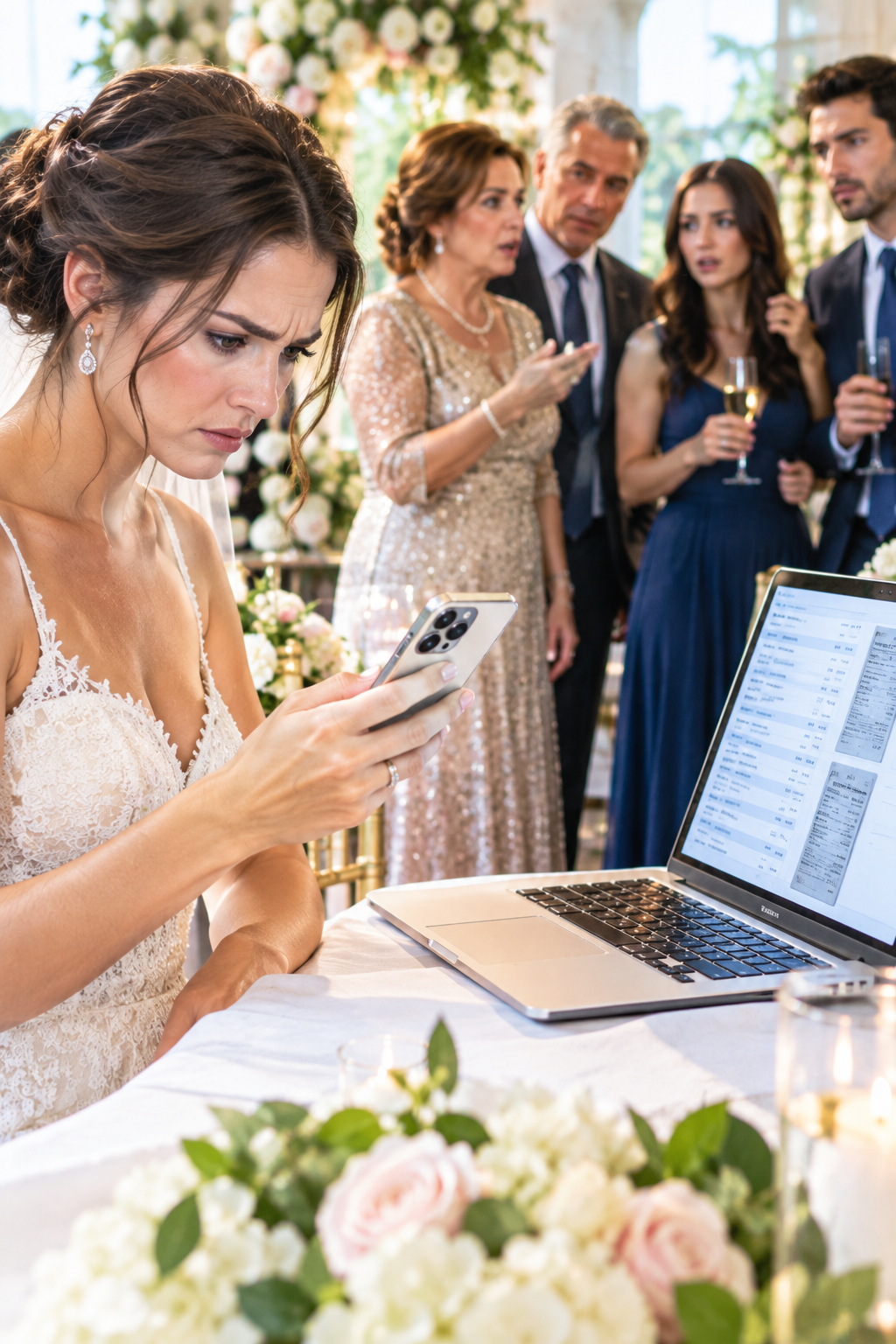
On the morning of her wedding, a beautiful young bride walked into St. Mary’s Church. The groom never arrived. Seventy years later, she was still standing at the altar, waiting for him.
The Wedding That Never Happened
In the autumn of 1886, the quiet English village of Ravensfield was preparing for the grandest wedding it had seen in decades.
Twenty-four-year-old Isabella Whitmore was to marry Edward Ashford, the only son of a wealthy landowner.
Isabella was known throughout the village for her beauty and gentle nature. She had long chestnut hair, pale blue eyes, and a smile that made even the most miserable person feel welcome.
Edward was equally admired.
He was handsome, intelligent, and deeply devoted to Isabella.
Their families had known each other for years, and their wedding was expected to unite two of the most respected households in Ravensfield.
The ceremony was scheduled for eleven o’clock at St. Mary’s Church.
On the morning of October 17, Isabella arrived in a white silk gown embroidered with delicate lace.
Her veil had belonged to her grandmother.
In her hands, she carried a bouquet of white roses.
The church was filled with guests.
The organist began playing.
The priest stood at the altar.
But Edward did not arrive.
At first, everyone assumed he had been delayed.
Then eleven became twelve.
Twelve became one.
And still there was no groom.
By sunset, the guests had gone home.
The flowers had begun to wilt.
The candles burned low.
But Isabella refused to leave.
“He promised he would come,” she whispered.
And when the church bells rang at midnight, the bride was still standing at the altar.
The Last Person to See Edward
The following morning, a search party was organised.
Edward’s carriage had been found abandoned beside Blackthorn Bridge, two miles outside the village.
The horses were gone.
The carriage door stood open.
And on the passenger seat lay a small velvet box containing Isabella’s wedding ring.
There was no sign of Edward.
The villagers searched the woods, the riverbanks, and the surrounding fields.
Nothing was found.
The only witness was an elderly tollkeeper named Thomas Reed.
He claimed to have seen Edward’s carriage approaching the bridge shortly before ten that morning.
But Edward had not been alone.
A woman dressed in black sat beside him.
Her face was hidden beneath a dark veil.
Thomas had never seen her before.
When questioned, he said something that deeply disturbed the constable.
“The woman wasn’t sitting beside him when the carriage passed.”
“What do you mean?” asked the constable.
Thomas swallowed.
“She was sitting behind him in the reflection of the carriage window.”
The constable dismissed the story as nonsense.
But Isabella believed every word.
Because she knew exactly who the woman in black might have been.
The Woman in the Old Photograph
Three weeks before the wedding, Isabella had discovered a strange photograph inside Edward’s family home.
It showed a young woman standing in front of St. Mary’s Church.
She wore a black wedding dress and held a bouquet of dead roses.
On the back of the photograph were written the words:
EVELYN ASHFORD — OCTOBER 17, 1816.
Seventy years before Isabella’s wedding.
When Isabella asked Edward about the photograph, he became visibly uncomfortable.
“She was my great-aunt,” he explained.
“Why is she wearing black?”
Edward hesitated.
“She was supposed to marry, but her fiancé disappeared before the ceremony.”
Isabella felt a chill.
“What happened to her?”
Edward looked away.
“She died waiting.”
Now, standing in the empty church, Isabella remembered the photograph.
Two brides.
Two weddings.
The same date.
And two missing grooms.
The Bride Who Refused to Leave
Days passed.
Isabella continued visiting St. Mary’s Church every morning.
She sat in the front pew, still wearing her wedding gown.
She refused to remove her veil.
Her family begged her to return home.
Her mother wept.
Her father threatened to have the church locked.
But Isabella would not listen.
“Edward is coming,” she insisted.
“He promised.”
Father Michael, the village priest, tried to comfort her.
“My child, you must accept that something terrible may have happened.”
Isabella looked toward the altar.
“Then why do I hear him calling me?”
The priest frowned.
“Calling you?”
“Every night, after the church bells stop, I hear Edward whispering from behind the altar.”
Father Michael felt uneasy.
“What does he say?”
Isabella lowered her voice.
“He says he is almost home.”
The priest glanced toward the dark wooden door leading to the church crypt.
It had not been opened in decades.
That evening, he ordered the church locked before sunset.
But the following morning, when he arrived to unlock the doors, Isabella was already inside.
Standing at the altar.
Holding her bouquet.
And smiling.
The Thirteenth Bell
On the seventh night after the wedding, a violent storm struck Ravensfield.
Rain hammered the stained-glass windows.
Thunder shook the church roof.
Father Michael had stayed late to examine the old parish records.
At precisely midnight, the church bells began ringing.
One.
Two.
Three.
The priest counted twelve chimes.
Then came another.
A thirteenth bell.
The sound was deep and unnatural.
The candles along the altar suddenly went out.
Father Michael heard footsteps moving down the aisle.
He turned.
Isabella stood at the entrance.
Her wedding gown was soaked.
Her veil concealed her face.
“Isabella?” he whispered.
She did not answer.
She walked slowly toward the altar.
Then she raised one hand and pointed toward the crypt.
“He’s waiting beneath us.”
The priest stepped backward.
“Who?”
“My husband.”
Father Michael shook his head.
“Edward is not your husband. The ceremony never took place.”
Isabella slowly lifted her veil.
Her eyes were filled with tears.
“Then why am I wearing his ring?”
She held out her hand.
On her finger was the wedding ring that had been found inside Edward’s abandoned carriage.
Father Michael stared in horror.
He had personally watched the constable lock that ring inside an evidence cabinet.
The Secret Beneath St. Mary’s Church
The following day, Father Michael searched the oldest church records.
In a leather-bound register dated 1816, he found the story of Evelyn Ashford.
She had been engaged to a young gentleman named Henry Vale.
Their wedding was scheduled for October 17.
But Henry disappeared on the morning of the ceremony.
Evelyn refused to leave the church.
For seven nights, she waited beside the altar.
On the eighth morning, the villagers found her wedding dress lying neatly on the church floor.
Evelyn herself was gone.
The register contained one final note.
The bells rang thirteen times at midnight. The bride was last seen entering the crypt.
Father Michael turned the page.
A second entry had been added years later.
The bride shall wait until the promise is fulfilled. Should another wedding be arranged upon the same date, the old vow shall awaken.
The priest felt a terrible chill.
He searched the remaining records.
Every seventy years, on October 17, a wedding had been scheduled at St. Mary’s.
And every time, the groom had disappeared.
The Door Behind the Altar
Father Michael decided to investigate the crypt.
He took an oil lantern and descended the narrow stone staircase beneath the church.
The air smelled of damp earth and ancient wood.
At the bottom stood a heavy iron door.
It was covered in strange carvings.
Most were too worn to read.
But one sentence remained clear.
A PROMISE MADE BEFORE THE DEAD MUST BE KEPT BY THE LIVING.
The priest pushed against the door.
It opened with a long groan.
Beyond it lay a small underground chapel.
Dust covered the pews.
Cobwebs hung from the ceiling.
At the far end stood a second altar.
And beside it was a wooden chair.
A woman sat in the chair.
She wore a black wedding dress.
Her head was bowed.
Her hands rested on a bouquet of dried roses.
Father Michael raised the lantern.
“Who are you?”
The woman slowly lifted her head.
Her face was pale and strangely beautiful.
“Evelyn Ashford,” she whispered.
The priest stumbled backward.
“But you died seventy years ago.”
Evelyn smiled sadly.
“No, Father.”
She looked toward the stone ceiling.
“I have been waiting.”
The Bride in Black
Father Michael could barely speak.
“Waiting for whom?”
“My husband.”
“Henry Vale?”
Evelyn nodded.
“He promised to return before the bells stopped ringing.”
The priest approached cautiously.
“What happened to him?”
Evelyn looked toward a dark passage behind the altar.
“He came back.”
Father Michael froze.
“Then why are you still here?”
Her expression changed.
“Because the church would not let us leave.”
Suddenly, footsteps echoed through the passage.
A young man emerged from the darkness.
He wore a Victorian wedding suit.
His face was pale.
His eyes were empty.
Father Michael recognised him from an old portrait.
Henry Vale.
Evelyn stood.
“Henry,” she whispered.
The man approached.
But as he stepped into the lantern light, his face began changing.
His features twisted.
His eyes darkened.
And his voice became deep and unfamiliar.
“I have worn many faces,” he said.
“But every bride believes the next one will be different.”
Father Michael backed away.
The figure smiled.
“And now Isabella has come to join us.”
The Curse of the Unfinished Wedding
The creature explained that long ago, St. Mary’s Church had been built over an ancient burial chamber.
Something had been sealed beneath the foundations.
Something that fed upon promises.
Every vow spoken at the altar strengthened it.
Every broken promise gave it another life.
In 1816, Henry Vale had discovered the secret.
He attempted to destroy the creature before his wedding.
But the creature took his appearance.
Evelyn believed she was waiting for her beloved.
Instead, she had been waiting for the thing that had stolen him.
Seventy years later, it had returned for another bride.
Isabella.
Father Michael looked toward Evelyn.
“Then where is the real Henry?”
Evelyn lowered her eyes.
“Behind the last door.”
The creature laughed.
“Where all the faithful husbands wait.”
Father Michael understood.
Edward was still alive.
Somewhere beneath the church.
And Isabella was being drawn toward him.
The Wedding at Midnight
That night, the church bells began ringing before midnight.
Father Michael hurried upstairs.
The doors were locked.
The windows would not open.
And the entire church was filled with candlelight.
Dozens of shadowy figures sat in the pews.
They wore old-fashioned clothing.
Their faces were hidden beneath dark veils and hats.
At the altar stood Isabella.
Her white wedding gown glowed in the candlelight.
Beside her stood Edward.
He wore the same suit he had chosen for their wedding.
“Edward!” Isabella cried.
She reached for him.
But Father Michael shouted.
“Don’t touch him!”
The figure turned.
Its face was Edward’s.
But its eyes were black.
The priest raised his crucifix.
“You are not Edward Ashford.”
The figure smiled.
“Does it matter?”
Isabella stepped backward.
“Where is he?”
The creature leaned closer.
“Would you like to see?”
The church floor began trembling.
The doors to the crypt swung open.
A cold wind rushed through the aisle.
And from below came the sound of dozens of voices whispering:
“We are still waiting.”
The Real Groom
Father Michael seized Isabella’s hand.
They hurried down the staircase into the crypt.
Behind them, the creature followed.
Its footsteps echoed through the darkness.
At the end of the underground chapel stood another iron door.
Father Michael remembered Evelyn’s words.
Behind the last door.
He pulled at the handle.
It would not move.
Isabella stepped forward.
She placed her wedding ring against the lock.
The metal began glowing.
With a loud click, the door opened.
Inside was a long stone chamber.
Dozens of men stood motionless along the walls.
Each wore wedding clothes from a different century.
Their eyes were closed.
Their faces were pale.
And at the far end stood Edward.
Isabella rushed toward him.
“Edward!”
His eyes opened.
“Isabella?”
She embraced him.
“I thought I’d lost you.”
Edward held her tightly.
“I tried to come back.”
He looked toward the doorway.
“But something wouldn’t let me.”
The creature appeared behind Father Michael.
Its voice filled the chamber.
“One bride. One groom. One promise.”
The walls began shaking.
The church bells rang thirteen times.
The Promise That Broke the Curse
Father Michael understood the creature’s weakness.
It survived because every bride waited for a promise that had never been fulfilled.
But Isabella had found Edward.
Their promise was no longer broken.
The priest turned toward the couple.
“Do you still wish to marry?”
Edward looked at Isabella.
“More than anything.”
Isabella nodded.
“Yes.”
The creature screamed.
“You cannot!”
Father Michael opened his prayer book.
And there, deep beneath St. Mary’s Church, he began the wedding ceremony.
The candles burst into flame.
The stone walls trembled.
The shadowy figures in the chamber began moving.
One by one, the missing grooms opened their eyes.
The creature lunged toward the altar.
But Evelyn appeared in the doorway.
Still wearing her black wedding dress.
She stepped between the creature and the priest.
“For seventy years, I waited,” she whispered.
“Not anymore.”
The creature recoiled.
Evelyn raised her hand.
Behind her stood Henry Vale.
The real Henry.
He took her hand.
And together, they turned toward the creature.
The underground chamber filled with golden light.
The creature let out a terrible cry.
Its form dissolved into darkness.
Then the church bells stopped.
The Wedding That Finally Happened
When dawn broke over Ravensfield, the doors of St. Mary’s Church stood open.
The villagers gathered outside.
Inside, Father Michael was found unconscious beside the altar.
Isabella and Edward stood nearby.
They were alive.
Exhausted.
But unharmed.
The priest later claimed that the couple had been married in a private ceremony during the night.
He refused to explain what had happened beneath the church.
The crypt was sealed.
The old records were locked away.
And the villagers agreed never to speak of the missing grooms again.
For the first time in seventy years, St. Mary’s Church was peaceful.
Isabella and Edward moved to a small house near the coast.
They lived happily for many years.
They had children.
They grew old together.
And every October 17, Edward gave Isabella a bouquet of white roses.
But Isabella never returned to St. Mary’s Church.
Not even once.
The Bride Who Stayed Behind
In 1956, seventy years after Isabella’s wedding, a young photographer named Charles Bennett visited Ravensfield.
He had been hired to photograph St. Mary’s Church before its restoration.
The building had been abandoned for nearly twenty years.
Its windows were cracked.
Its pews were covered in dust.
And the altar stood beneath a faded stained-glass window.
Charles arrived shortly before sunset.
As he prepared his camera, he noticed something strange.
A woman stood near the altar.
She wore a magnificent white Victorian wedding gown.
A long lace veil covered her face.
In her hands, she carried a bouquet of white roses.
Charles assumed she was a local woman posing for photographs.
“Excuse me,” he called.
“Are you waiting for someone?”
The woman did not answer.
He approached.
“Madam?”
Slowly, she turned.
Charles froze.
He recognised her face.
He had seen it in an old photograph at the village library.
Isabella Whitmore.
But Isabella had died peacefully in her sleep ten years earlier.
The woman smiled.
“Is he here yet?”
Charles stepped backward.
“Who?”
“My husband.”
He swallowed.
“Edward Ashford?”
The bride nodded.
Charles remembered reading that Edward had died several years before Isabella.
“He’s gone,” he whispered.
The woman’s smile faded.
“Then why did he promise to meet me here?”
The church bells began ringing.
One.
Two.
Three.
Charles ran toward the entrance.
But the doors slammed shut.
Behind him, the bride whispered:
“Please don’t leave. I cannot bear to wait alone again.”
The Last Photograph
Charles Bennett was found outside St. Mary’s Church the following morning.
He was sitting on the steps.
His hair had turned completely white.
He could not remember what had happened during the night.
His camera lay beside him.
Inside was a single exposed photographic plate.
When the photograph was developed, it showed the church altar.
A beautiful bride stood beneath the stained-glass window.
Her veil concealed her face.
Beside her stood a tall man in a dark wedding suit.
But behind them were dozens of other couples.
All dressed in wedding clothes from different centuries.
And in the front row sat Father Michael.
He had been dead for more than sixty years.
At the bottom of the photograph, written in faint white letters, was a sentence:
“THE WEDDING NEVER ENDS.”
The photograph was locked away.
St. Mary’s Church was permanently closed.
Its doors were chained.
Its windows were boarded.
And nobody was allowed inside after sunset.
But on certain October nights, villagers still report hearing music coming from the abandoned building.
A wedding organ.
Soft footsteps.
The rustle of a silk gown.
And sometimes, just before midnight, a woman’s voice can be heard from behind the locked doors.
“Is he here?”
Then another voice answers.
“Not yet, my love.”
And the church bells begin to ring.
Thirteen times.
The Final Secret
Years later, during repairs to the church foundations, workers discovered a hidden inscription beneath the altar.
It had been carved into the stone long before the church was built.
The words were barely visible.
But the village historian managed to translate them.
“THE DEAD MAY LEAVE WHEN LOVE IS FULFILLED. BUT THE ONE WHO OPENS THE DOOR MUST REMAIN.”
The workers abandoned the restoration.
The church was sealed once again.
And the villagers finally understood.
Isabella had escaped because someone else had taken her place.
Someone who had opened the door.
Someone who had remained behind.
And every seventy years, the church needed another bride.
That autumn, a young woman passing St. Mary’s noticed a light shining through the boarded windows.
She stopped.
From inside came the sound of wedding bells.
Then a gentle voice whispered:
“Would you help me with my veil?”
The young woman approached the door.
A silver key lay on the doorstep.
She picked it up.
And the lock began to turn.
THE END
Some brides wait for love. Others wait for forgiveness. But in the forgotten churches of old England, there are brides who wait for something far more terrifying.
They wait for someone to take their place.
And when the thirteenth bell rings, the wedding begins again.