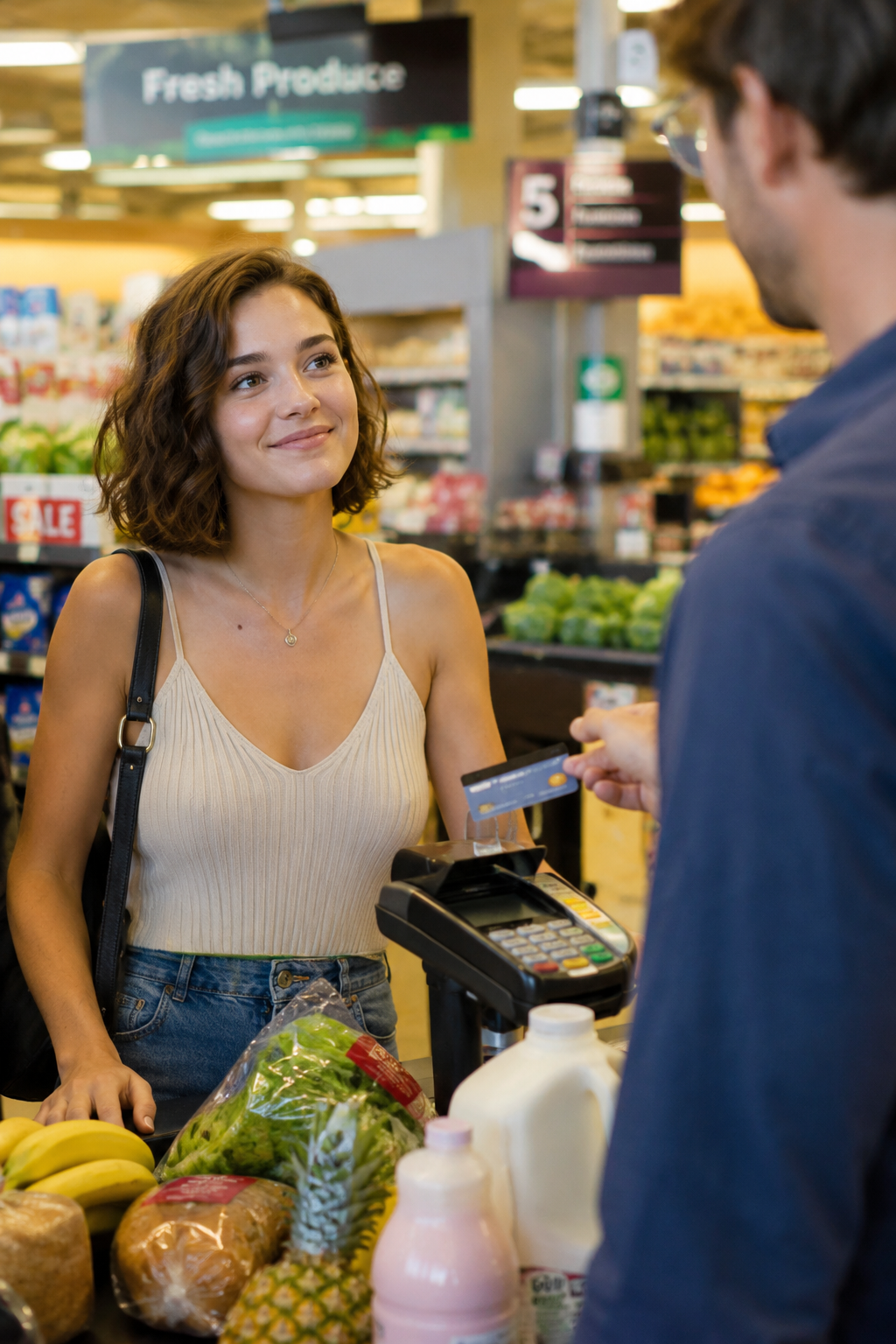
The total on the screen was $86.47.
I stared at it longer than I should have.
Then I quietly began putting things back.
The carton of eggs went first.
Then the chicken.
Then the coffee I had promised myself I could afford.
I was standing in the checkout line of a small neighborhood grocery store on a rainy Tuesday evening, calculating which necessities I could survive without, when a stranger behind me suddenly stepped forward.
“Keep everything,” he said.
I turned around.
He was a man in his late sixties, wearing a faded gray coat that looked several years older than he was. His silver hair was wet from the rain, and he held a small paper bag in one hand.
“I’m sorry?” I asked.
“I’ll pay for it.”
I shook my head immediately.
“No, that’s okay.”
He smiled.
“It’s really okay.”
Before I could argue, he handed his card to the cashier.
The machine beeped.
Approved.
I looked at the stranger, confused.
“Why would you do that?”
His smile disappeared.
For a moment, he looked almost sad.
Then he said something I would remember for the rest of my life.
“Because someone once did it for me.”
And then he walked away.
I thought that was the end of the story.
I was wrong.
The Night Everything Changed
Three months earlier, my life had been ordinary.
Not perfect.
Not easy.
But ordinary.
I worked as a receptionist at a dental clinic, rented a small apartment on the edge of town, and spent most of my evenings taking care of my eight-year-old daughter, Lily.
Lily was the center of my world.
Her father had left when she was four.
There had been no dramatic goodbye.
No final argument.
He simply stopped showing up.
At first, he promised he would visit.
Then he promised he would call.
Eventually, even the promises disappeared.
So I learned how to become both parents.
I learned how to fix broken toys, braid hair, attend school meetings, make pancakes, and pretend everything was fine when my bank account wasn’t.
That autumn had been particularly difficult.
The dental clinic reduced everyone’s hours.
My rent increased.
Lily needed new school shoes.
And my old car decided that it had apparently lived a long and meaningful life and wanted to retire.
I was falling behind.
But I kept telling myself the same thing.
“We’ll get through it.”
That Tuesday evening, I had exactly $94 left in my checking account.
My paycheck wasn’t coming for another five days.
I had gone to the grocery store because the refrigerator was nearly empty.
I stood in the produce aisle holding a calculator on my phone, trying to make $94 last until payday.
I removed everything that wasn’t essential.
No cookies.
No juice.
No cereal Lily liked.
No coffee.
I bought eggs, rice, pasta, bread, milk, vegetables, chicken, and a few other basics.
At the checkout, the total was $86.47.
I knew that wasn’t impossible.
But it was too close.
One unexpected expense could leave me with nothing.
That’s when I started putting things back.
And that’s when the stranger appeared.
The Man in the Gray Coat
After he paid, I rushed outside.
Rain fell heavily against the parking lot.
The stranger was already walking toward a dark blue sedan.
“Wait!”
He stopped.
I ran toward him.
“You can’t just do that.”
He turned around.
“Do what?”
“Pay for someone else’s groceries.”
He chuckled softly.
“Apparently I can.”
“I need to give you the money.”
“No.”
“At least let me pay you back.”
He shook his head.
“You don’t owe me anything.”
I stood there holding two grocery bags.
“Why me?”
He looked at the bags.
Then he looked at me.
“I don’t know.”
His answer made no sense.
“You don’t know?”
He seemed uncomfortable.
“No.”
He opened his car door.
Then he paused.
“What’s your name?”
“Emma.”
He nodded slowly.
“Emma.”
There was something strange about the way he said my name.
Almost as if he had heard it before.
“What’s yours?” I asked.
He smiled faintly.
“David.”
Then he got into his car and drove away.
I watched his taillights disappear through the rain.
Something about the encounter bothered me.
Not because he had paid.
Because of the way he looked at me.
As though he wasn’t helping a stranger.
As though he was looking at someone he already knew.
A Strange Feeling
When I got home, Lily was sitting at the kitchen table doing her homework.
“You’re late,” she said.
“I know.”
She looked at the grocery bags.
“Did you get cereal?”
I smiled.
“Yes.”
She jumped up.
“Really?”
I nodded.
The truth was, I had put the cereal back twice before the stranger paid.
Now it was sitting inside the bag.
That night, after Lily went to bed, I couldn’t stop thinking about David.
I searched my memory.
Had I seen him before?
At the grocery store?
At the dental clinic?
In the neighborhood?
Nothing.
The next morning, I convinced myself I was overthinking it.
People helped strangers all the time.
Maybe he had money.
Maybe he was generous.
Maybe I had simply looked desperate.
That last thought embarrassed me.
I didn’t want anyone to see me that way.
I went to work and forgot about him.
At least, I tried to.
The Envelope
Two days later, I returned home from work and found an envelope beneath my apartment door.
There was no name on it.
No return address.
Only one sentence written across the front.
For Emma.
My heart began beating faster.
I opened it.
Inside was a handwritten note.
“You probably don’t remember me. But your mother would.”
I froze.
My mother?
My mother had died seven years earlier.
I read the sentence again.
Then again.
There was a second line.
“Meet me Saturday at 4 p.m. at the old train station. Come alone.”
No signature.
But I knew.
David.
I immediately called my best friend, Sarah.
She listened silently while I explained everything.
“You shouldn’t go,” she said.
“I know.”
“Then don’t.”
“But I need to know how he knows my mother.”
Sarah sighed.
“Promise me you’ll be careful.”
“I promise.”
I didn’t tell her that I had already decided to go.
The Old Train Station
The old train station had been closed for years.
It stood on the edge of town, surrounded by overgrown grass and rusted fences.
When I arrived Saturday afternoon, the place was almost completely empty.
Then I saw him.
David was sitting on a wooden bench beneath the old station sign.
He stood when he saw me.
“You came.”
“You know my mother?”
His expression changed.
“Yes.”
“How?”
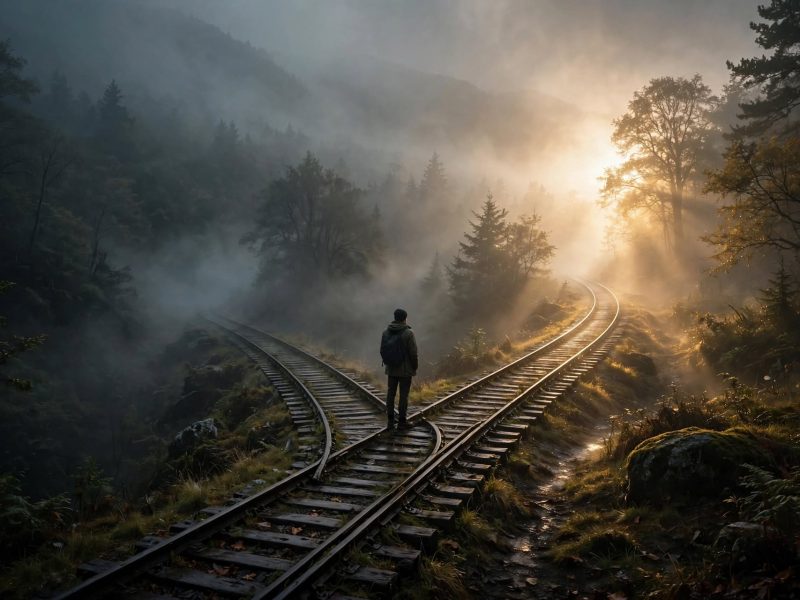
He looked toward the railway tracks.
“Your mother saved my life.”
I didn’t know what to say.
“My mother?”
He nodded.
“Her name was Margaret.”
I swallowed.
“Yes.”
“I met her twenty-two years ago.”
He sat down again.
I remained standing.
“What happened?”
David stared at his hands.
“I was having the worst year of my life.”
He explained that he had lost his job, his wife had left him, and he had accumulated enormous debt.
One winter evening, he had gone to the train station with no real plan.
He had been desperate.
He didn’t tell me exactly what he intended to do.
He didn’t need to.
I understood.
“Your mother found me sitting on that bench.”
He pointed toward the station.
“She sat beside me.”
“What did she say?”
David smiled.
“She asked if I was hungry.”
My eyes filled with tears.
That sounded exactly like my mother.
She always believed food could solve at least some problems.
David continued.
“She bought me dinner. Then she gave me $20.”
“Twenty dollars?”
“Yes.”
He laughed quietly.
“I told her I couldn’t accept it.”
“What did she say?”
He looked at me.
“She said, ‘Then don’t think of it as a gift. Think of it as something you’re supposed to pass on.’”
I couldn’t speak.
The Promise
David explained that he eventually rebuilt his life.
He found another job.
He remarried.
He started a small construction company.
Over the years, he never forgot my mother.
Every year, on the same week he had met her, he helped someone who needed it.
Sometimes it was buying groceries.
Sometimes paying for someone’s meal.
Sometimes helping a family with rent.
“Why didn’t you ever find us?” I asked.
“I tried.”
My heart sank.
“What do you mean?”
David reached into his coat and pulled out a photograph.
It was old and slightly faded.
My mother stood beside a much younger David.
I stared at her face.
She was smiling.
I hadn’t seen that smile in years.
“How did you get this?”
“She gave it to me that night.”
On the back, something was written.
David handed me the photograph.
I turned it over.
There was my mother’s handwriting.
“David — When you’re strong again, help someone who isn’t.”
I started crying.
David looked away, giving me a moment.
“I kept that photograph for twenty-two years.”
The Secret My Mother Never Told Me
I thought I knew everything about my mother.
Apparently, I didn’t.
David reached into his pocket again.
This time, he pulled out a small envelope.
“This is for you.”
I hesitated.
“What is it?”
“Something your mother left with me.”
My hands trembled as I opened it.
Inside was a letter.
The paper was yellowed with age.
My mother’s handwriting filled the page.
“Emma,
If you’re reading this, something has happened that I never expected.I don’t know what your life will look like when you’re older. Maybe you’ll have everything you need. Maybe you’ll struggle. Maybe you’ll wonder whether people still care about one another.
I hope you remember this: kindness doesn’t disappear when you give it away. It travels.
One day, someone may need you. Help them if you can.
And if you ever need help yourself, don’t be ashamed to accept it.
Love, Mom.”
I pressed the letter against my chest.
For years, I had remembered my mother as the woman who taught me to be strong.
But that day I realized she had also taught me something else.
It was okay not to be strong all the time.
Why Did He Choose Me?
I looked at David.
“There are thousands of people who need help. Why did you pay for my groceries?”
He was quiet for several seconds.
“Because I saw something.”
“What?”
He smiled.
“You were putting things back.”
I remembered.
“The cereal?”
“The coffee. The chicken. The cereal.”
He looked down.
“You weren’t choosing what you wanted. You were choosing what your daughter needed.”
I felt embarrassed.
David continued.
“I recognized that look.”
“What look?”
“The look of someone trying to make sure everyone else is okay before themselves.”
He stood.
“Your mother had that look too.”
The rain had started again.
Soft drops landed on the station roof.
For a moment, neither of us spoke.
Then David said something that changed how I thought about the entire experience.
“I didn’t pay for your groceries because you were helpless, Emma.”
He smiled.
“I paid because I remembered someone who once helped me when I was.”
The Unexpected Ending
Before we left, David gave me his phone number.
“If you ever need advice, call.”
I nodded.
“Thank you.”
He shook his head.
I looked at David.
“There are thousands of people who need help. Why did you pay for my groceries?”
He was quiet for several seconds.
“Because I saw something.”
“What?”
He smiled.
“You were putting things back.”
I remembered.
“The cereal?”
“The coffee. The chicken. The cereal.”
He looked down.
“You weren’t choosing what you wanted. You were choosing what your daughter needed.”
I felt embarrassed.
David continued.
“I recognized that look.”
“What look?”
“The look of someone trying to make sure everyone else is okay before themselves.”
He stood.
“Your mother had that look too.”
The rain had started again.
Soft drops landed on the station roof.
For a moment, neither of us spoke.
Then David said something that changed how I thought about the entire experience.
“I didn’t pay for your groceries because you were helpless, Emma.”
He smiled.
“Don’t thank me.”
“Why?”
“Because your mother already paid for it.”
I laughed through my tears.
We said goodbye.
I thought that was the end.
But two weeks later, something unexpected happened.
I received an email from the manager of the dental clinic.
They wanted to promote me.
The position came with more hours and better pay.
I accepted.
For the first time in months, I could breathe.
I replaced the broken tires on my car.
I paid my overdue electricity bill.
And I bought Lily the red backpack she had been asking for.
But I didn’t forget David.
Or my mother.
Passing It Forward
Several months later, I was standing in the same grocery store.
I had just finished shopping when I noticed an elderly man at the checkout.
His card was declined.
The cashier tried again.
Declined.
The man looked embarrassed.
“I’ll put some things back.”
He began removing items from his cart.
Bread.
Milk.
Eggs.
Then I saw him reach for a small container of medicine.
He hesitated.
I knew that hesitation.
I knew exactly what it meant.
I stepped forward.
“I’ll pay.”
The man looked at me.
“No, no. I couldn’t—”
“It’s okay.”
He stared at me.
“Why?”
I smiled.
“Because someone once did it for me.”
His eyes became wet.
“Are you sure?”
I nodded.
“Absolutely.”
As I paid, I remembered the old photograph.
My mother’s handwriting.
David’s gray coat.
The rainy evening.
And the $86.47 that had somehow become worth far more than groceries.
The Last Message
A year after I met David, I received a text from him.
It contained only one sentence.
“Your mother would be proud.”
I stared at the screen for a long time.
Then I replied:
“I think she’d be proud of you too.”
He didn’t answer.
He didn’t need to.
Because I finally understood the mystery behind the stranger who paid for my groceries.
He wasn’t really a stranger.
Not anymore.
He was a reminder.
A reminder that kindness can survive decades.
That a small act can travel farther than we ever imagine.
And that sometimes, when life makes us feel forgotten, someone appears at exactly the right moment to remind us that we aren’t alone.
The Lesson I Never Expected
I’ve thought about that grocery bill many times since then.
$86.47.
That’s what David spent that evening.
But what he really gave me was something money couldn’t buy.
He gave me permission to accept kindness without shame.
He reminded me of my mother’s final lesson.
And most importantly, he showed me that kindness doesn’t have to end with the person who receives it.
It can keep moving.
From one person to another.
From one generation to the next.
Sometimes it starts with something as simple as a stranger paying for someone’s groceries.
And sometimes, twenty-two years later, it comes back home.