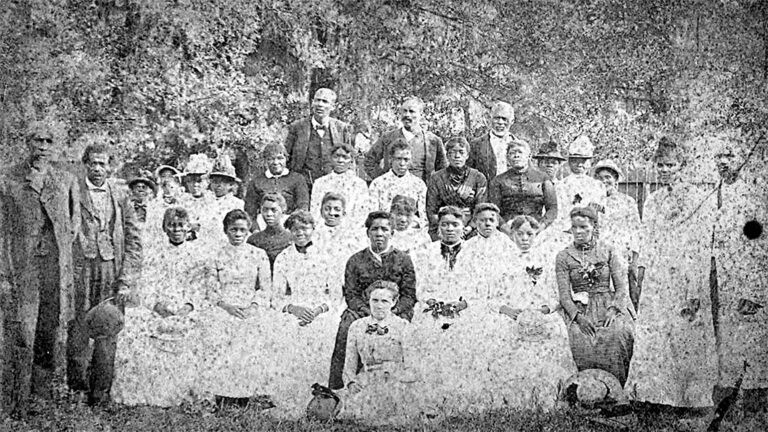
Every year on June 19, the United States observes Juneteenth, a federal holiday commemorating a pivotal moment in the history of emancipation.
The story behind Juneteenth reaches back to the final months of the American Civil War and to Galveston, Texas, on June 19, 1865, when Union Maj. Gen. Gordon Granger issued General Order No. 3 announcing that enslaved people in Texas were free under the authority of the Emancipation Proclamation.
But Juneteenth is more than a date on the calendar. Its history includes the delayed enforcement of emancipation in Texas, generations of community celebrations, and the holiday’s eventual recognition by the federal government in 2021.
Here are five important things to know about Juneteenth.
1. Juneteenth Comes From June 19, 1865
The name Juneteenth combines “June” and “nineteenth.”
On June 19, 1865, General Gordon Granger arrived in Galveston, Texas, and issued General Order No. 3. The order informed the people of Texas that, under the authority of the executive proclamation, enslaved people were free.
The announcement came more than two years after President Abraham Lincoln’s Emancipation Proclamation, which took effect on January 1, 1863.
The timing is one of the most important parts of understanding Juneteenth.
The Emancipation Proclamation did not immediately end slavery everywhere in the United States. It applied to people enslaved in areas designated as being in rebellion against the United States, while slavery remained legal in some areas not covered by the proclamation.
In Texas, the proclamation had not been effectively enforced while Confederate authority remained.
The arrival of Union forces in Galveston changed that.
2. The Emancipation Proclamation Came First
A common misunderstanding is that Juneteenth marks the date Abraham Lincoln issued the Emancipation Proclamation.
It does not.
Lincoln issued the Emancipation Proclamation on January 1, 1863, during the Civil War. It declared that people held as slaves in the states and areas designated by the proclamation “are, and henceforward shall be free.”
However, the proclamation depended on Union military success for its enforcement in Confederate territory.
Texas was geographically distant from major Union military operations, and Confederate control continued there for much of the war.
That helps explain why June 19, 1865, became such an important date.
When Union forces established military authority in Galveston and General Granger issued General Order No. 3, the federal emancipation policy could be enforced in Texas.
A Second Constitutional Milestone
The end of slavery nationwide came later.
On December 6, 1865, the required number of states ratified the 13th Amendment, which abolished slavery and involuntary servitude, except as punishment for a crime where the party had been duly convicted.
So Juneteenth should be understood as a major emancipation milestone, while the 13th Amendment completed the constitutional abolition of slavery nationwide.
3. Juneteenth Became a Community Tradition
The story of Juneteenth did not end with the 1865 announcement.
Beginning in 1866, African Americans in Texas organized celebrations around June 19. These gatherings included prayer services, speeches, readings, food, music, games, and other community activities.
The celebration gradually spread beyond Texas as African Americans moved to other parts of the country.
Communities created places specifically associated with Juneteenth gatherings. In Texas, examples included Emancipation Park in Houston, which was purchased in 1872, along with other community gathering spaces.
These traditions helped preserve Juneteenth across generations.
Rather than being simply a historical date, it became an occasion for families and communities to remember emancipation and celebrate freedom.
4. Juneteenth Became a Federal Holiday in 2021
For generations, Juneteenth was observed primarily through community and state-level traditions.
Its national status changed in 2021.
On June 17, 2021, President Joe Biden signed legislation establishing Juneteenth as a federal holiday. The National Archives identifies Juneteenth as the first new federal holiday since Martin Luther King Jr. Day was established in 1983.
The official federal holiday is called Juneteenth National Independence Day.
The federal recognition did not create the tradition itself. Instead, it gave national legal recognition to a commemoration that had existed for generations, particularly within African American communities in Texas and elsewhere.
Today, Juneteenth is observed throughout the country through a variety of educational, cultural, and community activities.
5. Juneteenth Is About Remembering History and Freedom
Juneteenth carries several historical meanings.
At its center is the announcement of emancipation in Texas on June 19, 1865.
But the history also illustrates an important distinction between declaring freedom and enforcing freedom.
The National Archives notes that emancipation was not a single event. Different emancipation milestones occurred over time, culminating constitutionally in the ratification of the 13th Amendment in December 1865.
Juneteenth also reflects the role of African American communities in preserving historical memory.
For generations, people marked June 19 with family gatherings, religious services, speeches, festivals, educational events, and other forms of commemoration.
That history continues today.
For some people, Juneteenth is primarily a day of remembrance.
For others, it is a celebration of freedom and cultural heritage.
For many communities, it is both.
Why June 19 Matters
Imagine the summer of 1865.
The Civil War was ending.
The legal and military structures of slavery were collapsing.
But in Texas, many enslaved people had not yet received official notice that emancipation was being enforced.
Then, on June 19, General Order No. 3 was issued in Galveston.
The document became the historical foundation for Juneteenth.
The original order is preserved by the National Archives, where it remains an important primary document for understanding the holiday.
More than 150 years later, its date has become one of the most recognizable symbols of emancipation in American history.
Juneteenth: A Holiday With a Long History
Juneteenth’s history stretches from Galveston in 1865 to a federal holiday recognized across the United States today.
The five key facts are simple:
- Juneteenth is observed on June 19.
- It commemorates General Order No. 3, issued in Galveston in 1865.
- It came more than two years after the Emancipation Proclamation.
- African American communities preserved and celebrated Juneteenth for generations.
- It became a federal holiday in 2021.
Understanding Juneteenth means understanding both the historical announcement of emancipation and the generations of people who kept its memory alive.
It is a date rooted in American history—and a reminder that major historical changes can unfold through a series of events rather than a single moment.
Juneteenth National Independence Day is observed each year on June 19.