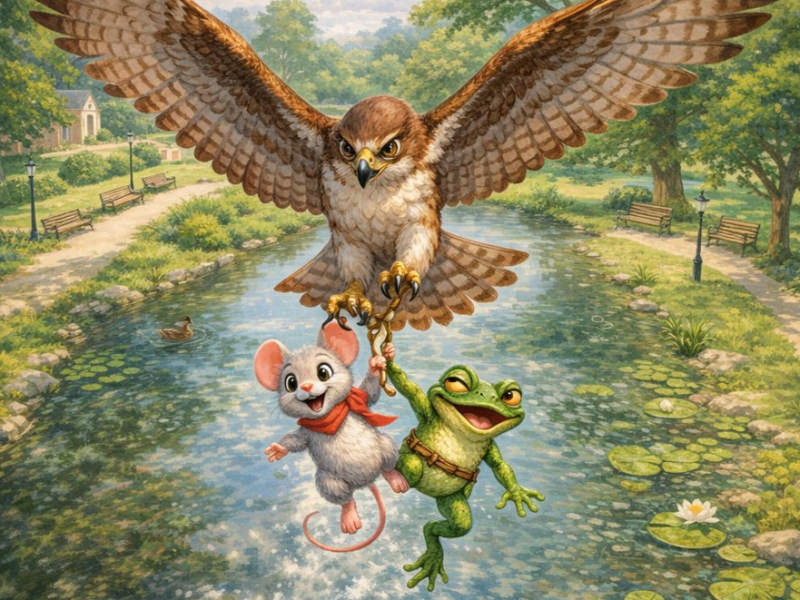
We are taught to celebrate success.
We admire people who build successful businesses, write bestselling books, create brilliant ideas, achieve their dreams, and seem to know exactly where they are going.
But there is something most success stories leave out.
The failures.
Behind almost every impressive achievement are unsuccessful attempts, rejected ideas, embarrassing mistakes, abandoned plans, and moments when the person involved seriously wondered whether they should give up.
The truth is uncomfortable:
Inspiration often doesn’t come from success. It comes from failure.
Failure forces us to stop, think, question our assumptions, and search for another way forward. It can turn an ordinary problem into a creative challenge and a painful setback into the beginning of a better idea.
So, if you have recently failed at something, perhaps the story isn’t over.
Perhaps you have just reached the part where inspiration begins.
Why We Think Success Creates Inspiration
Success looks inspiring from the outside.
When someone succeeds, we see the result. We see the finished product, the award, the successful company, the published book, the promotion, or the person standing confidently at the finish line.
What we don’t see is everything that happened before that moment.
We don’t see the first terrible draft.
We don’t see the unanswered emails.
We don’t see the rejected applications.
We don’t see the business idea that nobody wanted.
We don’t see the countless mistakes that helped create the final result.
This creates a dangerous illusion: that successful people were inspired from the beginning.
Often, they weren’t.
They simply kept responding to failure until they discovered something that worked.
Failure Forces You to Think Differently
When everything goes according to plan, there is little reason to question your approach.
Success tells you:
“Keep doing this.”
Failure tells you:
“Something needs to change.”
That difference is incredibly powerful.
When your original plan fails, you are forced to examine it.
Maybe your assumptions were wrong.
Maybe your strategy was incomplete.
Maybe you misunderstood what people wanted.
Maybe the problem wasn’t what you thought it was.
These discoveries can become the foundation of your next idea.
Failure Creates Questions
Some of the most important creative questions begin with disappointment:
- Why didn’t this work?
- What did I misunderstand?
- What could I have done differently?
- Is there a better solution?
- What does this experience teach me?
- What should I try next?
Questions create possibilities.
And possibilities create inspiration.
Step 1: Accept That the Attempt Didn’t Work
The first step isn’t trying harder.
It is accepting reality.
Sometimes we waste enormous amounts of energy pretending that something is working when it clearly isn’t.
Maybe a project needs to be changed.
Maybe an idea needs to be abandoned.
Maybe a strategy needs to be completely redesigned.
Admitting that something failed isn’t weakness.
It is information.
You cannot improve something you refuse to examine.
Image 1 — The Moment of Failure
Suggested image: A person sitting at a desk surrounded by rejected papers, unfinished sketches, or failed project notes.
Caption: Every new beginning can start with an honest look at what didn’t work.
Step 2: Look for the Lesson
Failure becomes useful when you learn from it.
Instead of asking only, “Why did I fail?” ask more specific questions.
What was I expecting?
Write down what you believed would happen.
What actually happened?
Compare your expectation with reality.
Where was the difference?
That gap is often where the lesson is hiding.
Perhaps you underestimated the time required.
Perhaps you targeted the wrong audience.
Perhaps you didn’t prepare enough.
Perhaps you were solving the wrong problem entirely.
Once you understand the difference between expectation and reality, your next attempt becomes smarter.
Step 3: Let Failure Change Your Approach
One of the biggest mistakes people make is repeating the same strategy and simply hoping for a different result.
If something failed, doing exactly the same thing again usually won’t solve the problem.
Change something.
Change the process.
Change the audience.
Change the timing.
Change the message.
Change the product.
Or perhaps change the question you’re asking.
Sometimes the breakthrough doesn’t come from improving the original idea.
It comes from realizing that you need an entirely different idea.
Failure Can Make You More Creative
Creativity isn’t always born in moments of comfort.
Sometimes creativity appears because you have no other choice.
A limited budget forces you to find a cheaper solution.
A failed design forces you to rethink the structure.
A rejected proposal forces you to communicate more clearly.
A difficult problem forces you to look at something from another angle.
Constraints can create creativity because they force the brain to search beyond the obvious answer.
The Problem Becomes the Inspiration
Imagine someone trying to create a product but discovering that their original design is too expensive to manufacture.
They could simply give up.
Or they could ask:
“How can I create the same result with fewer resources?”
That question changes everything.
The problem is no longer simply an obstacle.
It becomes a creative challenge.
Failure Teaches You What Success Cannot
Success tells you that something worked.
Failure can tell you why something didn’t work.
That distinction matters.
When you succeed immediately, you may not understand which parts of your strategy were responsible for the result.
You simply know that it worked.
Failure encourages deeper investigation.
You begin looking for weak points.
You examine your decisions.
You question assumptions.
You notice details you previously ignored.
That knowledge can become extremely valuable the next time you try.
Not Every Failure Is a Waste of Time
A failed attempt can still produce something valuable.
You might gain:
- New knowledge
- A useful skill
- A better understanding of your audience
- Greater self-awareness
- A stronger strategy
- New relationships
- A clearer sense of direction
- A better idea
This doesn’t mean every failure is secretly wonderful.
Failure can hurt.
It can cost time and money. It can damage confidence. It can be disappointing.
But a painful experience can still contain useful information.
The goal isn’t to pretend failure feels good.
The goal is to learn something from it.
The Difference Between Failure and Giving Up
There is an important difference between failing and giving up.
Failure says:
“This attempt didn’t work.”
Giving up says:
“Nothing will ever work.”
Those are completely different statements.
One describes an experience.
The other predicts the future.
You can fail ten times and still be moving forward if every attempt teaches you something new.
Progress doesn’t always look like success.
Sometimes progress looks like understanding what not to do anymore.
Your First Idea Doesn’t Have to Be Your Best Idea
Many people become discouraged because their first attempt isn’t brilliant.
But first attempts are supposed to be imperfect.
The first version gives you something to react to.
Then you improve it.
Then you improve it again.
Then you discover something you couldn’t have understood before starting.
Think about the process:
Idea → Attempt → Failure → Learning → Adjustment → Better idea
The failed attempt isn’t separate from the successful idea.
It helped create it.
Why Rejection Can Become a Source of Inspiration
Rejection is one of the hardest forms of failure because it can feel personal.
Someone says no to your idea, your application, your proposal, your work, or your opportunity.
Your first reaction might be:
“I’m not good enough.”
But rejection doesn’t always mean that.
Sometimes it means the timing was wrong.
Sometimes the audience was wrong.
Sometimes the offer wasn’t clear.
Sometimes another option was simply a better fit.
And sometimes, yes, there is something you need to improve.
The important thing is to separate the rejection from your identity.
A rejected idea is not the same thing as a rejected person.
How to Turn Failure Into Inspiration
If you want to make failure useful, try this simple process.
1. Write down what happened
Don’t rely entirely on memory.
Write down the facts.
What did you try?
What was the result?
What went differently than expected?
2. Identify one mistake
Don’t try to solve everything at once.
Find the biggest thing that went wrong.
3. Identify one lesson
Ask yourself what the experience taught you.
4. Change one thing
Don’t completely destroy the process and start from zero unless necessary.
Change one important variable and test again.
5. Try again
This is the step people often skip.
Learning without action doesn’t create progress.
Use the lesson.
Try again.
The People You Admire Have Failed Too
Whenever you compare your beginning to someone else’s success, remember that you are probably comparing two completely different chapters.
You see their result.
You don’t see their process.
You see the confident entrepreneur.
You don’t see the first failed business.
You see the successful writer.
You don’t see the rejected manuscripts.
You see the accomplished creator.
You don’t see the hundreds of experiments nobody noticed.
Success is visible.
Failure is usually private.
That’s why other people’s achievements can sometimes make us feel inadequate.
We are comparing our behind-the-scenes with their highlight reel.
What If Your Failure Is Actually Giving You Direction?
Sometimes failure doesn’t just teach you how to improve.
Sometimes it tells you that you need to change direction.
Perhaps the career you thought you wanted isn’t right for you.
Perhaps the business you planned isn’t solving a meaningful problem.
Perhaps the goal you chased belonged more to other people’s expectations than your own.
Failure can expose that.
And although discovering the truth can be painful, it can also be liberating.
You don’t always need to make the original plan work.
Sometimes you need the courage to create a better plan.
The Most Important Lesson
Failure is not automatically valuable.
Reflection makes it valuable.
If you refuse to examine what happened, failure can remain nothing more than disappointment.
But if you study it, question it, learn from it, and use that knowledge to make your next attempt better, the experience becomes part of your growth.
You don’t have to love failure.
You don’t have to pretend setbacks are exciting.
You simply need to refuse to let them be meaningless.
Final Thoughts: Your Next Idea May Be Hidden Inside Your Last Failure
Success is satisfying.
Failure is uncomfortable.
But discomfort can make us pay attention.
It can force us to ask better questions, develop new skills, rethink old assumptions, and discover possibilities we never considered before.
So if something you tried recently didn’t work, don’t rush to label the experience as the end.
Pause.
Look at it.
Study it.
Ask what it is trying to teach you.
Then take that lesson into your next attempt.
Because the inspiration you’re waiting for may not arrive as a sudden flash of genius.
It may arrive quietly—in the middle of a mistake, inside a rejected idea, or at the exact moment you realize:
“There has to be a better way.”
And that thought might be the beginning of everything.
SEO Information
SEO Title:
Why Inspiration Comes From Failure: The Secret Nobody Wants to Hear
Meta Description:
Discover why failure can become a powerful source of inspiration, creativity, and personal growth—and how to turn setbacks into better ideas.
Primary Keyword:
Inspiration from failure
Secondary Keywords:
- learning from failure
- failure and creativity
- turning failure into success
- lessons from failure
- overcoming failure
- inspiration and resilience
- personal growth through failure
- creativity after failure
URL Slug:inspiration-from-failure
Tags:
Failure, Inspiration, Creativity, Success, Personal Growth, Motivation, Resilience, Mindset, Self-Improvement, Life Lessons
Featured Image Alt Text:Person walking toward a sunrise after overcoming failure
Recommended Featured Image Caption:
Sometimes the path to inspiration begins with a setback.