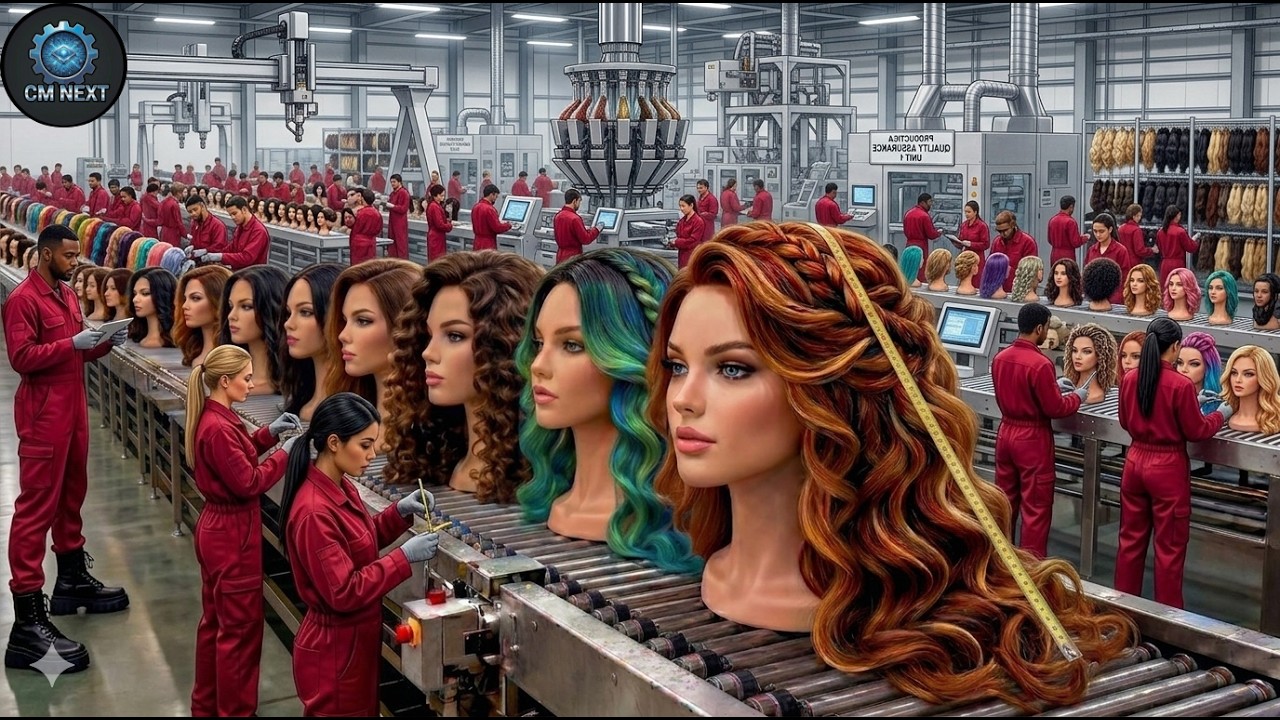
The Little Wig Factory Story
From the outside, a little wig factory may look like an ordinary workshop filled with shelves, sewing machines, mannequin heads, bundles of hair, and carefully organized tools.
But inside, something remarkable happens.
Loose strands of hair are transformed into carefully shaped wigs that can completely change the way someone looks and feels.
A finished wig may appear simple when sitting on a mannequin. Behind that polished appearance, however, is a process involving careful material selection, detailed cap construction, hair attachment, styling, and quality inspection.
Welcome to The Little Wig Factory, where every wig begins as a collection of materials and ends as a finished creation ready to become part of someone’s personal style.
What Is a Wig Factory?
A wig factory is a specialized workspace where wigs are designed, constructed, styled, inspected, and prepared for customers.
The exact process depends on the type of wig being produced. Some wigs are primarily machine-made, while premium and custom pieces may involve extensive handwork.
Modern wig production can combine several techniques, including sewn wefts and hand-ventilated hair. Hand ventilation involves attaching individual strands or small groups of strands directly to a lace or other suitable foundation, helping create a more natural-looking hairline and part.
That combination of craftsmanship and production technology is what makes a wig factory so fascinating.
Step 1: Choosing the Hair
Everything begins with the hair.
Before a wig can be constructed, the material must be examined and prepared. Depending on the product, manufacturers may work with human hair or synthetic fibers.
For human hair wigs, factors such as length, texture, color, condition, and hair direction are important. Keeping strands organized and aligned can help reduce tangling and contribute to a smoother finished product.
At The Little Wig Factory, imagine workers carefully examining bundles before production begins.
A bundle that looks ordinary at first glance may actually contain hundreds or thousands of strands that need to be organized before they can become part of a finished wig.
Why Hair Preparation Matters
Poor preparation can affect the final appearance and performance of a wig.
Hair may need to be:
- Sorted by length
- Separated according to texture
- Cleaned and prepared
- Aligned in the correct direction
- Grouped into suitable bundles
- Checked for consistency
The foundation of a beautiful wig begins long before the first strand is attached.
Step 2: Measuring and Designing the Wig
A wig needs more than beautiful hair.
It needs the right shape.
For custom work, measurements can be taken from the wearer’s head and transferred to an appropriately sized wig block or mold. This allows the maker to create a foundation designed for the intended fit.
This stage is where a general idea becomes a specific design.
The maker considers questions such as:
- How large should the cap be?
- Where should the hairline sit?
- What density is required?
- What length should the hair have?
- Should the wig have a center or side part?
- What type of lace or foundation is appropriate?
Small measurements can make a surprisingly large difference.
Step 3: Building the Wig Cap
Now the basic structure begins to take shape.
The wig cap acts as the foundation that holds everything together. Depending on the design, it may include mesh, lace, elastic sections, adjustable straps, ear tabs, or other components.
The cap must balance several things at once:
Fit. Comfort. Stability. Breathability. Appearance.
A beautiful wig can still be disappointing if the foundation doesn’t fit correctly.
In a small workshop, this stage may involve careful hand sewing. In larger manufacturing environments, specialized machines can speed up portions of the construction process.
Step 4: Preparing the Hair for Attachment
Before hair is attached to the cap, it may need additional preparation.
Wigmakers can use specialized tools to organize and blend hair. One traditional technique involves drawing hair through a hackle, helping remove tangles and short or unwanted strands while organizing the bundle.
This is one of those quiet steps that most people never see.
There is no dramatic transformation yet.
Just hair.
Tools.
Patience.
And the steady hands of someone who understands how individual strands will eventually become part of a finished hairstyle.
Step 5: Attaching the Hair
This is where the little factory becomes a place of extraordinary patience.
Hair can be attached to a wig foundation using different techniques.
One common method is wefting, where hair is sewn into rows and then attached to the cap.
Another technique is ventilation, in which individual strands are tied directly into lace or another foundation using a small ventilating needle. This approach is especially useful around areas where a natural-looking hairline or part is desired.
For handmade wigs, this work can require many hours.
The maker repeatedly performs tiny movements:
Pick up hair.
Position hair.
Tie.
Release.
Repeat.
Thousands of times.
Step 6: Creating a Natural Hairline
The hairline is one of the most important visual areas of a wig.
If the hairline looks too dense or artificial, the entire wig can appear less natural.
Experienced wigmakers often pay special attention to the front and parting areas, sometimes ventilating only one or a few hairs at a time to create a finer appearance.
This is where craftsmanship becomes especially visible.
A few carefully placed strands can change the appearance of an entire wig.
Step 7: Styling the Wig
Once the hair is securely attached, the wig begins to look like a hairstyle rather than a collection of materials.
This is the creative stage.
The stylist may:
- Trim the ends
- Shape layers
- Create curls or waves
- Straighten the hair
- Adjust the part
- Add volume
- Refine the hairline
- Customize the overall silhouette
For human hair wigs, styling can resemble working with natural hair.
For synthetic wigs, the appropriate heat and styling techniques depend on the fiber being used.
The goal is simple:
Make the wig look intentional, balanced, and beautiful.
Step 8: Color and Finishing Touches
Some wigs are finished in their original color.
Others are customized.
A professional colorist may create highlights, darker roots, blended shades, or other effects depending on the design.
Coloring requires care because processing can affect the condition of hair fibers.
The final color should work together with the haircut, texture, density, and overall design.
At The Little Wig Factory, this might be the moment when a nearly finished wig finally develops its personality.
Step 9: Quality Inspection
A wig should never leave the factory simply because it looks finished.
It needs to be inspected.
Quality checks can include examining the cap, hair density, attachment points, color, styling, lace, construction, and overall appearance.
Manufacturing workflows commonly include dedicated inspection before packaging.
This final inspection is important because small problems are easier to correct before the product reaches the customer.
A loose section.
An uneven cut.
A visible construction issue.
An inconsistent color.
A professional quality check looks for details that an ordinary glance might miss.
Step 10: Cleaning, Protecting, and Packaging
The final stage is packaging.
The finished wig is prepared so it can be transported while maintaining its shape and condition.
Depending on the manufacturer, packaging may include protective materials, branded boxes, hair nets, documentation, and other accessories.
Then comes the moment every wigmaker has been working toward.
The box closes.
The finished wig is ready to leave the little factory.
What Makes a Handmade Wig Special?
The biggest difference between a simple mass-produced product and a carefully customized wig often comes down to attention to detail.
Handmade construction can allow the maker to customize areas such as:
- Hairline density
- Part placement
- Cap dimensions
- Hair direction
- Overall density
- Texture
- Styling
That doesn’t mean every handmade wig is automatically better than every machine-made wig.
Different construction methods serve different purposes.
The right choice depends on the desired appearance, budget, durability, comfort, and intended use.
The People Behind the Little Wig Factory
Machines can help with production.
But people bring the craft to life.
Someone chooses the materials.
Someone checks the hair.
Someone builds the cap.
Someone attaches thousands of strands.
Someone shapes the final hairstyle.
Someone examines the finished piece before it is packaged.
That human element is what gives a small wig workshop its character.
Every finished wig carries traces of the people who made it.
Why Wig Making Is Both Craft and Manufacturing
At first glance, wig production might seem like a simple beauty process.
It isn’t.
It combines elements of:
Textile Work
The cap and foundation require sewing, stitching, mesh, lace, and structural design.
Hairdressing
The finished hair needs cutting, shaping, coloring, and styling.
Precision Craftsmanship
Hand ventilation requires extremely careful control of individual strands.
Quality Control
The completed product needs to meet the intended specifications before it reaches the customer.
That combination makes wig making a fascinating industry.
How Long Does It Take to Make a Wig?
There is no single answer.
Production time varies according to the type of wig, construction method, customization level, materials, and amount of handwork involved.
A simple machine-made wig can move through production much faster than a highly customized, hand-ventilated piece.
Some traditional descriptions of full custom hand-tied wigs estimate several weeks for completion, while individual production stages vary considerably by design and workshop.
The important lesson is that a finished wig represents more work than its appearance might suggest.
The Little Wig Factory: More Than a Workshop
A wig factory may be small.
The tools may be simple.
The workspace may be quiet.
But the work happening inside can be remarkably detailed.
A bundle of hair becomes a cap.
The cap becomes a wig.
The wig becomes a hairstyle.
And eventually, that hairstyle becomes part of someone’s identity, confidence, costume, performance, or everyday life.
That is what makes the little wig factory so special.
It isn’t simply a place where hair is attached to a cap.
It is a place where craftsmanship turns raw materials into something personal.
Final Thoughts
The next time you see a beautifully styled wig, take a moment to look beyond the finished hairstyle.
Think about the preparation that came before it.
The hair that was sorted.
The cap that was constructed.
The strands that were attached.
The hairline that was carefully shaped.
The styling that gave it character.
And the final inspection that made sure everything was ready.
Inside The Little Wig Factory, beauty doesn’t appear all at once.
It is built slowly—one strand, one stitch, one careful decision at a time.
And sometimes, the smallest workshops are where the most remarkable craftsmanship happens.