
Introduction
The Pursuit of Happyness is one of those movies that stays with you long after the credits finish. It is a powerful story about poverty, fatherhood, determination, failure, and the belief that life can eventually become better—even when everything seems to be falling apart.
Released in 2006, the film follows Chris Gardner, a struggling salesman and devoted father who refuses to give up despite facing homelessness, financial problems, and repeated disappointment. Will Smith plays Chris Gardner, while Smith’s real-life son, Jaden Smith, portrays his young son, Christopher.
What makes the story especially moving is that it is inspired by the real life of Chris Gardner. The film transforms his difficult journey into an emotional story about a father who does everything he can to build a better future for his child.
Chris Gardner’s Difficult Beginning
At the beginning of the story, Chris Gardner is trying desperately to make a living selling portable medical devices called bone-density scanners.
Chris believes the machines can improve people’s lives, but there is one major problem: they are extremely expensive, and convincing doctors to buy them is difficult.
He has invested much of his family’s money into the devices, expecting them to provide a comfortable income.
Instead, the machines become a financial burden.
Chris spends much of his time trying to sell them while his wife, Linda, struggles with the family’s growing financial problems. Bills are piling up, and their relationship becomes increasingly strained.
A Family Under Pressure
Chris is doing everything he can to keep the family together, but his financial situation continues to deteriorate.
Linda works long hours and becomes exhausted by their circumstances. Chris is convinced that he can eventually turn things around, but hope becomes harder to maintain as unpaid bills and everyday expenses continue to grow.
Their situation reaches a breaking point.
Linda eventually decides that she cannot continue living under the same pressure and leaves Chris and their young son.
Chris is now faced with an enormous responsibility.
He has to find a way to survive while taking care of Christopher.

The Opportunity That Changes Everything
One day, Chris notices a successful-looking man stepping out of a sports car.
Chris becomes curious and asks the man what he does for a living.
The answer changes his perspective.
The man works as a stockbroker.
Chris begins to wonder whether a career in finance could provide the stability and income he desperately needs.
However, getting into the industry will not be easy.
Chris learns about an unpaid internship at a prestigious brokerage firm. The position could eventually lead to a permanent job, but there is a major problem.
There is no guaranteed salary during the internship.
For someone who is already struggling to afford food and housing, accepting an unpaid position seems almost impossible.
Yet Chris sees something important: an opportunity to change his future.
He decides to take the risk.
Starting From Almost Nothing
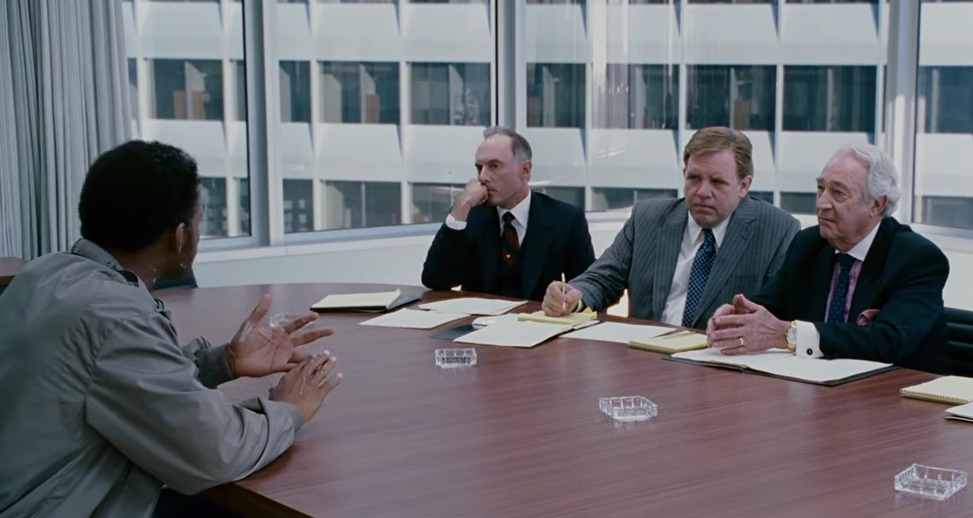
Chris arrives at the brokerage firm and begins competing with other candidates.
He knows he cannot afford to fail.
The internship becomes a test of intelligence, discipline, sales ability, and endurance.
While the other interns may have more comfortable lives, Chris is dealing with problems outside the office that they cannot see.
He has to work during the day while simultaneously trying to find somewhere for himself and his son to sleep at night.
His life becomes a constant race against time.
Homelessness and the Struggle to Survive
Chris’s financial problems become increasingly severe.
Eventually, he and Christopher lose their home.
For a father, this is one of the most painful moments of the story.
Chris now has to protect his young son while having almost nothing himself.
They move between temporary places, shelters, and anywhere they can find safety.
Some nights are especially difficult.
Chris tries to make Christopher feel secure even when he is frightened and uncertain himself.
This part of the story demonstrates one of the film’s central ideas: being a good parent does not mean having everything—it means continuing to show up for your child when circumstances are at their worst.
Chris does not want Christopher to feel responsible for their situation.
Instead, he continues working toward a solution.
The Subway Bathroom
One of the most emotionally powerful moments occurs when Chris and Christopher have nowhere else to go.
Chris takes his son into a subway station bathroom and tries to create a safe place for them to spend the night.
Christopher is too young to fully understand the seriousness of their circumstances.
Chris tries to comfort him while quietly struggling with his own emotions.
The moment reveals the enormous pressure Chris is carrying.
He is not only fighting poverty.
He is fighting to protect his son’s childhood.

The Internship Becomes a Race Against Time
Despite his personal struggles, Chris continues showing up at the brokerage firm.
He knows that everyone around him is competing for a limited number of permanent positions.
Chris cannot afford to waste a single opportunity.
He studies whenever he can.
He makes phone calls.
He learns how to communicate with potential clients.
He watches experienced brokers carefully and tries to understand what makes them successful.
But Chris has one major advantage.
He is extraordinarily persistent.
Where other people might give up after repeated rejection, Chris keeps making another call.
Where another person might decide the situation is impossible, Chris looks for another solution.
His determination gradually begins to attract attention.
Learning the Value of Time
One of the most important lessons Chris learns is that success is not simply about working hard.
It is also about working intelligently.
He realizes that every minute matters.
He becomes extremely organized and learns how to make the most of his limited time.
He avoids unnecessary distractions and focuses on the activities most likely to produce results.
This becomes a crucial part of his development.
Chris is not suddenly rescued by luck.
He is slowly becoming more capable.

Chris Faces Rejection Again and Again
The road to success is not smooth.
Chris encounters rejection from potential clients and setbacks in his personal life.
There are moments when his plan seems unrealistic.
He has every reason to quit.
But he refuses.
Instead of seeing rejection as proof that he is incapable, Chris treats it as another problem he needs to solve.
This mindset separates him from many people around him.
He understands that success may require hundreds of failures before one important opportunity finally appears.
The Relationship Between Chris and Christopher
Although the movie is about career success, its emotional center is the relationship between Chris and his son.
Christopher becomes Chris’s reason for continuing.
Chris wants his son to have opportunities that he did not have.
He also wants Christopher to understand that his circumstances do not define his future.
One of the film’s most memorable messages comes from Chris encouraging his son not to allow other people to convince him that he cannot achieve something.
The Moment Everything Changes
After months of sacrifice, Chris reaches the end of the internship.
He knows that only one or a small number of people may receive permanent employment.
For Chris, the decision means far more than a career opportunity.
It represents a chance to escape homelessness.
It represents stability for his son.
It represents proof that all the sacrifices were not meaningless.
When Chris is finally called into the office, he is told that he has been selected for the position.
For a moment, he struggles to process what has happened.
After everything he has endured, Chris finally has a job.
His reaction is deeply emotional because the victory is not simply about money.
It is about survival.
It is about dignity.
It is about being able to tell his son that their difficult period may finally be coming to an end.
The Ending of The Pursuit of Happyness
The movie ends on a hopeful note.
Chris has secured the job he fought so hard to obtain.
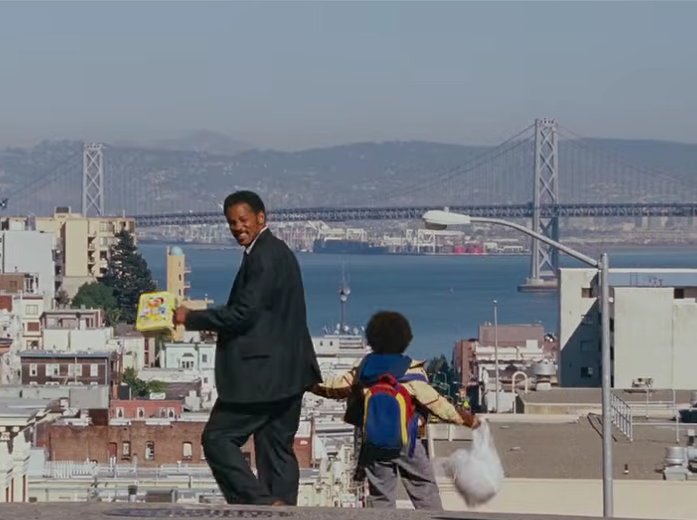
He leaves the building and walks through the city with a mixture of relief, happiness, and disbelief.
He has survived homelessness.
He has survived financial hardship.
He has survived rejection.
Most importantly, he has protected his relationship with his son.
The film then reminds viewers that Chris Gardner’s story continued beyond the events shown in the movie.
He eventually became a successful businessman and investor.
His journey demonstrates that extraordinary success can sometimes begin during the period of life when everything appears to be going wrong.
What The Pursuit of Happyness Really Means
The title itself contains one of the film’s biggest ideas.
Happiness is presented not as something that simply appears but as something people may have to pursue.
Chris does not begin the story with wealth, security, or influence.
He begins with uncertainty.
His journey demonstrates that happiness can sometimes be connected to purpose, responsibility, perseverance, and the belief that tomorrow can be better than today.
5 Important Life Lessons From the Movie
1. Never Let Failure Define You
Chris experiences rejection repeatedly.
But failure does not become his identity.
He keeps learning and trying.
2. Your Circumstances Can Change
Chris’s situation seems hopeless at several points.
Yet circumstances that appear permanent can change dramatically when opportunity meets preparation and persistence.
3. Hard Work Requires Direction
Working endlessly is not enough.
Chris becomes successful because he learns to focus his energy on activities that can actually move his life forward.
4. Family Can Become a Source of Strength
Christopher is one of the strongest motivations behind Chris’s determination.
His love for his son gives him another reason to continue when giving up would be easier.
5. Keep Moving Forward
Perhaps the biggest lesson is perseverance.
Chris does not know exactly how everything will work out.
He simply refuses to stop trying.
The Real Story Behind The Pursuit of Happyness
One reason the movie feels so powerful is that it is based on the life of the real Chris Gardner.
His experience involved poverty, homelessness, fatherhood, and a determined attempt to enter the financial industry.
The film dramatizes aspects of his journey for storytelling purposes, but its central message remains rooted in his real-life struggle.
His story later became an inspiration to people around the world because it demonstrates how dramatically a person’s circumstances can change.
Why The Movie Continues to Inspire People
Many inspirational movies focus on people who already have advantages.
The Pursuit of Happyness begins from the opposite position.
Chris has very little.
He has financial problems, personal problems, and a child depending on him.
Yet he continues searching for an opportunity.
That makes his eventual success especially satisfying.
The movie does not suggest that everyone who works hard will automatically become wealthy. Instead, it emphasizes resilience, preparation, personal responsibility, and the courage to continue pursuing an opportunity even when the outcome is uncertain.
Final Thoughts
The Pursuit of Happyness is ultimately more than a story about becoming successful.
It is a story about refusing to abandon hope.
Chris Gardner’s journey shows how quickly life can change and how important it can be to keep moving even when progress seems invisible.
He begins as a struggling salesman who cannot provide a stable home for his family.
He ends the story with a professional opportunity and the possibility of a completely different future.
But his greatest achievement is not simply getting the job.
It is surviving the journey without giving up on himself or his son.
And that is why the story continues to resonate with audiences: sometimes the hardest chapter of your life can become the beginning of your greatest transformation.